 English
 Advanced in AI Security Management (AAISM)
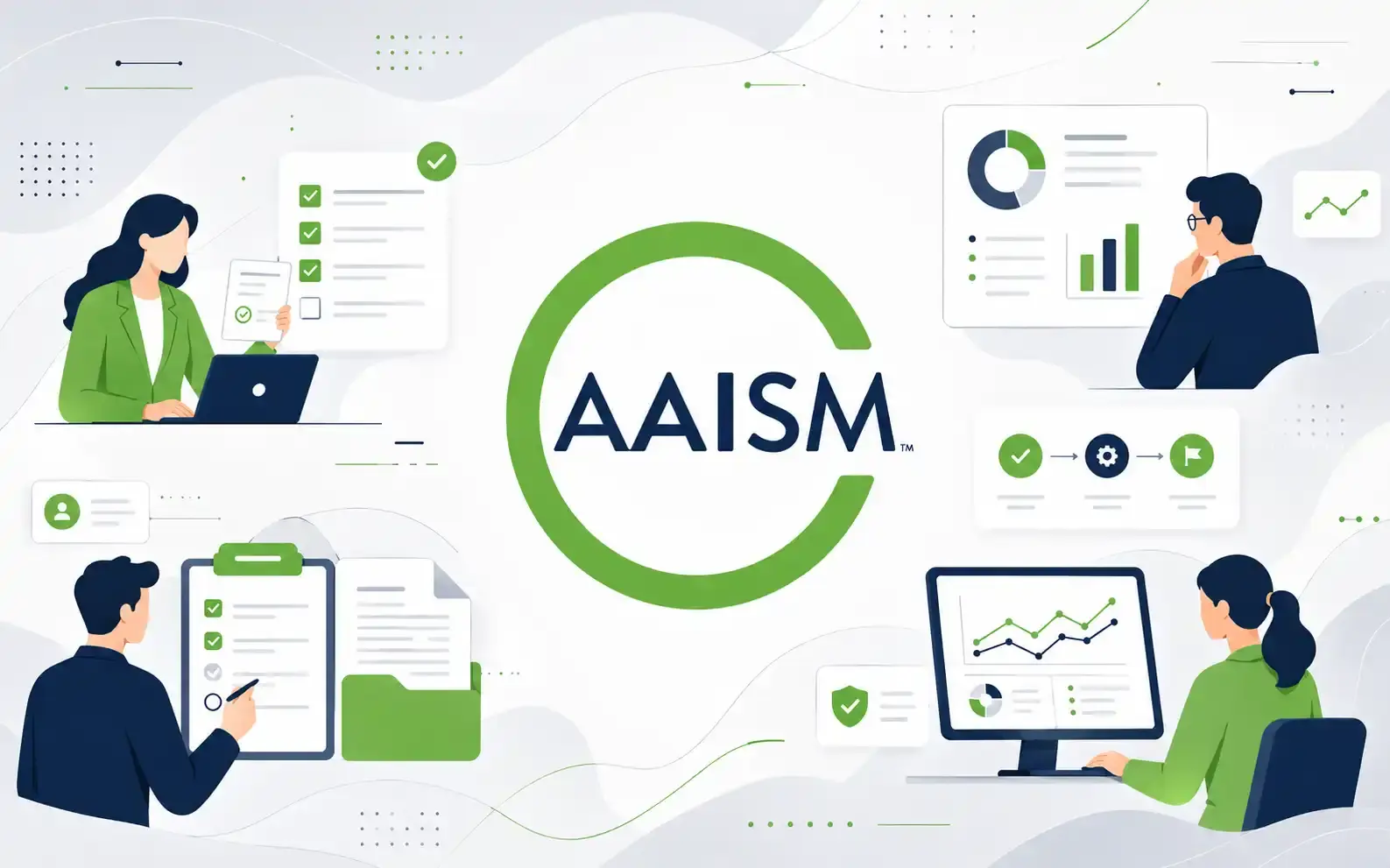
The AAISM certification is a professional program designed to equip individuals with advanced knowledge and skills in information security management. It focuses on developing the ability to implement and manage enterprise-level cybersecurity strategies and protect organizational digital assets. The program covers key areas such as risk management, security governance, compliance, and information security frameworks. It also helps learners understand how to assess security risks, develop effective security policies, and support decision-making processes within organizations. By completing the AAISM certification, candidates gain the capability to contribute to building secure and compliant information systems while aligning with international cybersecurity standards and best practices.
- 4.8/5.0
- 600 Enrolled
- Last updated Jul 21, 2026
Course Overview
- In an era increasingly defined by artificial intelligence, the imperative to secure AI systems, data, and processes has never been more critical. The ISACA Applied AI Security Management (AAISM) Certification Course is meticulously designed to equip cybersecurity, IT governance, and risk management professionals with the specialized knowledge and practical skills required to navigate the complex landscape of AI security. This comprehensive program delves into the unique vulnerabilities, threats, and risks inherent in AI deployments, moving beyond traditional cybersecurity paradigms to address the specific challenges posed by machine learning models, data pipelines, and autonomous systems. Participants will gain a profound understanding of how to protect AI assets, ensure data integrity, and maintain the confidentiality of sensitive information processed by AI, all while adhering to ethical guidelines and regulatory requirements.
- This course adopts a holistic approach, integrating foundational AI concepts with advanced security frameworks and ISACA's renowned principles of governance, risk, and compliance. We will explore the entire lifecycle of AI systems, from secure design and development to deployment, monitoring, and incident response. Professionals will learn to identify and mitigate AI-specific threats such as adversarial attacks, data poisoning, model evasion, and privacy breaches. Furthermore, the curriculum emphasizes the importance of establishing robust governance structures, developing effective security policies, and implementing appropriate controls to manage AI-related risks systematically. This proactive stance ensures that organizations can harness the transformative power of AI while safeguarding their assets and maintaining trust.
- Upon completion, participants will not only be proficient in the technical aspects of AI security but also adept at formulating strategic approaches to AI risk management and ethical AI deployment. This certification course is invaluable for those looking to advance their careers in AI-driven environments, providing them with the credibility and expertise to lead initiatives in securing intelligent systems. Whether you are a security architect, a data scientist, an IT auditor, or a risk manager, the AAISM course will empower you to become a pivotal asset in your organization's journey towards secure, responsible, and effective AI adoption, ensuring resilience against the evolving threat landscape.
Course Outlines
Module 1: Foundations of AI and Cybersecurity Intersections
- Review of Core AI/ML Concepts and Paradigms
- Fundamentals of Modern Cybersecurity Principles and Practices
- The Evolving Threat Landscape for AI Systems: Unique Vulnerabilities
- Introduction to Ethical Hacking Methodologies for AI Contexts
- Legal,
Ethical, and Societal Implications of AI Security
Module 2: Identifying AI-Specific Vulnerabilities and Attack Vectors
- Adversarial Machine Learning: Evasion, Poisoning, and Model Inversion Attacks
- Data Privacy and Confidentiality Risks in AI/ML Pipelines
- Membership Inference and Model Stealing Attacks: Protecting AI Intellectual Property
- Bias and Fairness Exploits: Understanding and Mitigating Algorithmic Manipulation
- Explainability
and Interpretability as Security Weaknesses
Module 3: Securing AI Models and Data Pipelines
- Secure Data Governance and Lifecycle Management for AI Datasets
- Robustness Techniques Against Adversarial Attacks: Defense Strategies
- Explainable AI (XAI) for Enhanced Security Auditing and Anomaly Detection
- Privacy-Preserving AI: Federated Learning, Differential Privacy, and Homomorphic Encryption
- Secure Deployment and MLOps Security: From Development to Production
Module 4: Leveraging AI for Enhanced Cybersecurity Operations
- AI-Powered Threat Detection, Anomaly Detection, and Incident Response
- Behavioral Analytics and Predictive Security with Machine Learning
- Automated Vulnerability Management and Penetration Testing using AI
- Natural Language Processing (NLP) for Security Intelligence and SIEM Enhancement
- AI in
Security Orchestration, Automation, and Response (SOAR) Platforms
Module 5: Governance, Risk, and Compliance (GRC) for AI Security
- Developing and Implementing AI Security Policies and Frameworks
- Comprehensive Risk Assessment and Management for AI Systems
- Navigating AI Regulations and Standards (e.g., EU AI Act, NIST AI RMF)
- Crafting Effective Incident Response Plans for AI-Specific Breaches
- Auditing, Assurance, and Continuous Monitoring of AI Security Posture
Module 6: Advanced Topics and Emerging Threats in AI Security
- Security of Generative AI and Large Language Models (LLMs): New Attack Surfaces
- The Impact of Quantum Computing on Current AI Cryptography and Security
- Securing Edge AI and IoT Devices: Distributed AI Security Challenges
- Blockchain and Distributed Ledger Technologies for AI Security and Trust
- Human Factors in AI Security: Social Engineering and Insider Threats in AI Contexts
Module 7: Capstone Project and Strategic Implementation
- Practical Threat Modeling for a Complex AI Application
- Designing a Secure End-to-End AI Architecture for a Business Case
- Developing a Comprehensive AI Security Incident Response Playbook
- Implementing and Evaluating Robustness Techniques for an ML Model
- Presenting a Strategic AI Security Roadmap for an Organization
Course Objectives
- Evaluate the unique security risks and vulnerabilities inherent in various AI systems and their lifecycle.
- Design and implement robust security architectures and controls for AI models, data, and platforms.
- Analyze and mitigate AI-specific threats, including adversarial attacks, data poisoning, and privacy breaches.
- Develop comprehensive AI security governance frameworks, policies, and compliance strategies.
- Formulate ethical considerations and integrate privacy-preserving techniques into AI system design and deployment.
- Assess the effectiveness of AI security measures through continuous monitoring, auditing, and assurance practices.
- Plan and execute AI incident response and recovery procedures to maintain operational resilience.
- Apply best practices for securing the AI supply chain and managing third-party AI service risks.
Course Prerequisites
- Fundamental understanding of IT security concepts and principles.
- Basic knowledge of artificial intelligence and machine learning concepts.
- Familiarity with risk management frameworks and methodologies.
- Experience in IT governance, cybersecurity, or data management is highly recommended.
- Strong analytical and problem-solving skills.
Course Schedule
| Date | Days Left | Training Location | |
|---|---|---|---|
No schedules available | |||
Our Customer Reviews
4.8
(*)(*)(*)(*)(*)
Excellent
(*)(*)(*)(*)(*)
(*)(*)(*)(*)( )
( )( )( )( )( )
( )( )( )( )( )
( )( )( )( )( )
Eva Ricci
The training for AAISM at iExperts was well arranged. I could study after work and still keep up with the class.
(*)(*)(*)(*)(*)
Tom Roux
I joined AAISM at iExperts and the online format worked smoothly. The recordings and notes helped me study on quiet evenings.
(*)(*)(*)(*)(*)
Anouk Weber
For AAISM I needed guidance not only slides. iExperts gave me a real learning path and I felt more ready after each session.
(*)(*)(*)(*)(*)
This course includes
- Duration16 h
- VendorISACA
- CategoryBusiness Management
- CertificateYes
Course Profile
Similar Courses
Certification ISACA Advanced in AI Risk (AAIR)
ISACA Advanced in AI Risk (AAIR) is an advanced certification for experienced IT risk professionals that validates the knowledge and skills required to identify, assess, govern, and manage risks associated with artificial intelligence (AI) across the enterprise. The credential is designed for professionals with an established background in risk management who want to extend their expertise to address AI-specific governance, lifecycle, and program management challenges.
- 16 h 4.8 (600)
Lead CMMC Certified Assessor Designation (LCCA)
The LCCA training is an advanced instructor-led program that typically lasts 3 to 5 days. It is designed to prepare experienced cybersecurity professionals to lead assessments under the Cybersecurity Maturity Model Certification (CMMC) framework. The course focuses on assessment planning, execution, reporting, and leadership skills required for conducting formal CMMC evaluations.
- 32 h 4.8 (500)
CMMC Certified Assessor (CCA)
The Cyber AB Certified Assessor (CCA) is a professional certification for individuals responsible for evaluating organizations against the Cybersecurity Maturity Model Certification (CMMC) requirements. It focuses on assessing cybersecurity controls, verifying compliance, and ensuring security maturity within defense supply chains.
- 32 h 4.8 (600)
Course Tags
You may also like
Check out most 🔥 courses in the market
Certified Information Security Manager (CISM)
The Certified Information Security Manager (CISM) course provides essential expertise in designing, managing, and governing enterprise information security programs. It equips you to align security strategies with business objectives, conduct risk assessments, and implement effective controls. You will learn to manage incident response, evaluate vulnerabilities, and ensure organizational compliance. The program also builds leadership and communication skills to promote a strong security culture. Earning CISM validates your ability to lead security initiatives that protect assets and support business success.
4.8
(2135)
Certified in the Governance of Enterprise IT (CGEIT)
The Certified in the Governance of Enterprise IT (CGEIT) course equips experienced professionals to lead and optimize enterprise IT governance. It focuses on aligning IT strategies with business objectives, maximizing value delivery, and ensuring effective risk and resource management. Participants gain a strong understanding of governance frameworks, strategic alignment, and accountability structures. The course also covers key components such as policies, processes, SLAs/OLAs, and data integrity. Graduates will be able to design, implement, and monitor robust IT governance systems that enhance organizational performance.
4.8
(1743)
Certified Information Systems Auditor (CISA)
The Certified Information Systems Auditor (CISA) course equips professionals to audit, control, and secure IT systems effectively. Participants learn to assess IT governance, evaluate system performance, and manage risks and compliance. The course covers data protection, internal controls, and business continuity planning. It prepares attendees for the CISA exam and roles such as IT auditor, risk manager, and compliance officer. Certification validates expertise in IT governance and adherence to global standards.
5
(2398)
Dora Lead Manager
The DORA (Digital Operational Resilience Act) Lead Manager course equips senior professionals with the skills and knowledge needed to oversee, manage, and ensure compliance with the DORA framework in financial institutions and related ICT service providers. This program covers operational resilience strategies, ICT risk management, incident handling, reporting requirements, and oversight of third-party providers, enabling participants to lead their organizations in meeting the EU’s regulatory expectations effectively.
4.9
(2000)
ISO 9001 Lead Implementer
The ISO 9001 Lead Implementer training course equips participants with the necessary knowledge and skills to support an organization in establishing, implementing, managing, and maintaining a Quality Management System (QMS) based on ISO 9001:2015. This course provides a practical methodology for the implementation process by applying best practices and aligning with international quality management standards. By the end of the course, participants will gain hands-on expertise in leading implementation projects, managing teams, and preparing organizations for certification audits.
4.8
(3000)