 English
 AI Strategic Change in Org
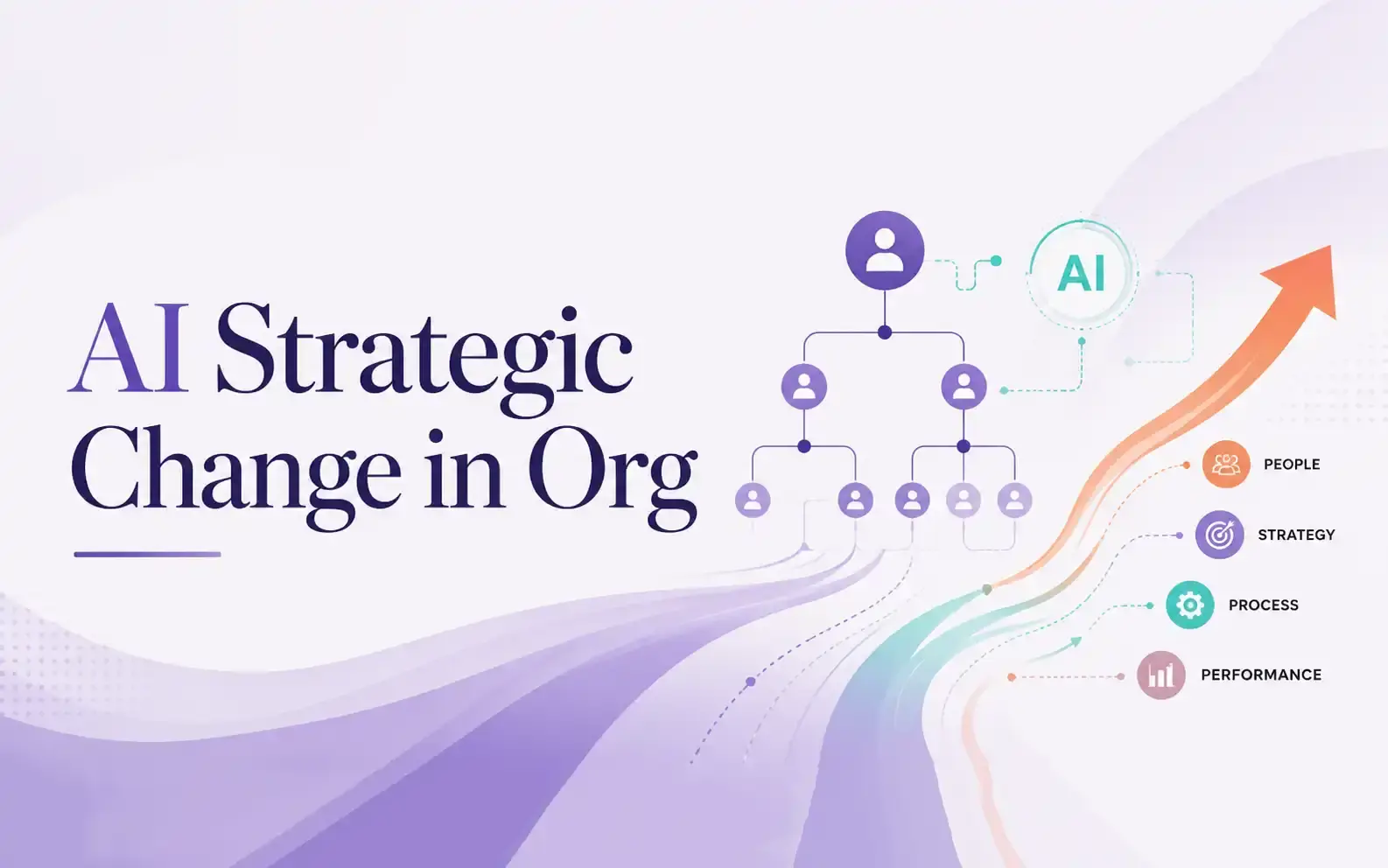
This course explores how Artificial Intelligence (AI) is transforming the way organizations operate, compete, and evolve. It focuses on strategic, organizational, and cultural implications of AI beyond technical aspects. Participants will learn to leverage AI for innovation, process optimization, and data-informed decision-making. The program covers aligning AI with business goals, assessing readiness, and creating an implementation roadmap. Through case studies and frameworks, learners will examine AI-driven transformation, including change management, cross-functional collaboration, and ethical considerations. By the end, participants will be equipped to lead AI initiatives that enhance efficiency, resilience, and long-term value.
- 4.9/5.0
- 2998 Enrolled
- Last updated Jun 15, 2026
Course Overview
- AI
Strategic Change in Organizations
is a comprehensive, forward-looking course designed for leaders, managers, and
professionals who are shaping the future of their organizations through digital
transformation. This program provides the strategic knowledge and practical
tools necessary to harness the power of Artificial Intelligence (AI) as a
catalyst for innovation, efficiency, and competitive advantage.
- In an era where AI is redefining industries and business models, this course empowers participants to move beyond theory—developing the ability to design, implement, and manage AI-driven strategies that create measurable impact. Participants will explore how to align AI initiatives with core business objectives, build organizational readiness, and lead transformative change with confidence and integrity.
Through a blend of strategic insights, practical frameworks, and real-world case studies, learners will gain an in-depth understanding of how to:
- Assess organizational readiness for AI integration across processes, people, and technology.
- Develop and execute AI-driven transformation strategies that enhance operational efficiency, decision-making, and value creation.
- Lead organizational change by promoting a culture of adaptability, collaboration, and continuous learning.
- Navigate ethical and governance challenges, ensuring responsible and transparent AI deployment.
- Implement effective performance measurement systems to evaluate ROI, scalability, and the long-term sustainability of AI initiatives.
- Participants will engage in scenario-based learning, strategic simulations, and group discussions that mirror real organizational challenges. They will also learn how to bridge the gap between data science and business strategy, transforming AI from a technical tool into a strategic enabler of growth.
By the end of the program, learners will be equipped to:
- Champion responsible and human-centered AI adoption.
- Drive digital transformation initiatives that align with organizational goals.
- Strengthen business resilience and competitiveness in an AI-driven economy.
- Build cross-functional teams capable of sustaining innovation and continuous improvement.
Who Should Take This Course
This course is ideal for:
- C-level executives, directors, and department heads responsible for setting strategic direction and overseeing innovation.
- Project managers and transformation leaders driving organizational change or digital initiatives.
- Business strategists and consultants seeking to integrate AI into client or enterprise solutions.
- Professionals in organizational development, innovation, or technology management who aim to align AI capabilities with long-term strategic goals.
- Policy and governance professionals involved in shaping ethical, regulatory, or compliance frameworks for AI adoption.
- Whether you are leading a large enterprise, a public-sector initiative, or a growing organization, this course provides the insights, frameworks, and leadership skills needed to transform AI potential into lasting organizational success.
Course Outlines
Module 1: Introduction to AI in the Organizational Context
- Understanding
Artificial Intelligence and Its Business Implications
Explore the foundational concepts of AI, its capabilities, and limitations. Understand how AI technologies create business value through enhanced decision-making, automation, and data-driven insights.
- The
Evolution of AI and Its Role in Organizational Transformation
Trace the historical development of AI — from rule-based systems to modern machine learning and generative AI — and examine how AI has become a catalyst for digital transformation across industries.
- Overview
of Key AI Technologies (Machine Learning, NLP, Automation, Analytics)
Gain a practical overview of the main AI technologies shaping today’s business environment, including predictive analytics, natural language processing, intelligent automation, and computer vision.
- The
Link Between AI Adoption and Strategic Competitiveness
Understand how organizations leverage AI to improve efficiency, customer experience, innovation, and long-term competitive advantage.
Module 2: Strategic Alignment and AI Vision
- Aligning
AI Initiatives with Corporate Strategy and Business Goals
Learn how to ensure that AI projects directly support core business objectives and deliver measurable value.
- Developing
an AI Vision and Roadmap for Organizational Success
Explore the process of crafting a clear and inspiring AI vision, defining priorities, and developing an implementation roadmap aligned with strategic goals.
- Identifying
AI Opportunities Across Business Functions
Discover frameworks for identifying AI use cases across marketing, operations, HR, finance, and customer service, focusing on ROI and strategic fit.
- Measuring
Strategic Impact and Defining Success Metrics
Define performance indicators to evaluate the success of AI initiatives, including business KPIs, productivity gains, and innovation outcomes.
Module 3: Change Management in the Age of AI
- Principles
of Organizational Change Management
Understand the core models of change management (e.g., Kotter’s 8-Step Model, ADKAR) and how they apply in AI-driven transformation contexts.
- Human
and Cultural Dimensions of AI Transformation
Explore the psychological and cultural shifts required for AI adoption, including trust-building, transparency, and employee empowerment.
- Overcoming
Resistance to Change and Fostering Innovation
Learn practical strategies to manage resistance, communicate effectively, and foster an innovation-oriented culture.
- Building
an AI-Ready Workforce Through Reskilling and Upskilling
Examine how to develop talent strategies that address skill gaps, promote continuous learning, and prepare employees for AI-augmented roles.
Module 4: Leadership and Governance for AI Adoption
- The
Role of Leadership in Driving AI Strategy
Explore how leaders can champion AI adoption, inspire teams, and integrate AI thinking into strategic decision-making.
- AI
Governance Frameworks and Accountability Structures
Understand governance models that ensure effective oversight, compliance, and ethical AI use across the organization.
- Ethical,
Legal, and Regulatory Considerations in AI Deployment
Discuss emerging legal frameworks, data privacy laws, and ethical standards guiding responsible AI deployment.
- Risk
Management and Responsible AI Use
Learn to identify, assess, and mitigate AI-related risks, including bias, data misuse, and unintended consequences.
Module 5: Implementing AI-Driven Transformation
- Framework
for AI Project Selection and Prioritization
Learn to evaluate AI initiatives based on feasibility, impact, alignment, and scalability using structured prioritization tools.
- Integration
of AI into Existing Business Processes
Explore strategies for embedding AI solutions into operational workflows to optimize efficiency and decision-making.
- Managing
Data as a Strategic Asset for AI Initiatives
Understand data management principles, data quality, governance, and the role of data infrastructure in enabling AI success.
- Ensuring
Scalability and Sustainability of AI Solutions
Learn how to design scalable AI systems that evolve with organizational needs and technological advancements.
Module 6: Case Studies and Best Practices
- Real-World
Examples of Successful AI-Led Transformations
Review in-depth case studies from leading global organizations that have successfully implemented AI strategies.
- Lessons
Learned from Global Organizations Implementing AI Strategies
Identify common pitfalls, success factors, and lessons learned from both successful and failed AI initiatives.
- Evaluating
Outcomes and Refining the AI Roadmap
Learn how to assess project outcomes, gather feedback, and continuously refine the AI roadmap for ongoing improvement.
Module 7: Capstone – Designing an AI Change Strategy
- Developing
a Tailored AI Change Strategy for an Organization
Participants apply concepts learned throughout the course to design a comprehensive AI transformation strategy for a chosen organization.
- Presenting
Strategic Recommendations and Implementation Plans
Prepare a professional presentation outlining the proposed AI strategy, governance model, change management plan, and expected business outcomes.
- Peer
Review and Feedback Session
Engage in collaborative evaluation and constructive feedback with peers and instructors to refine strategies and strengthen presentation skills.
Course Objectives
By the end of this course, participants will be able to:
- Assess organizational readiness for AI adoption by evaluating leadership commitment, organizational culture, digital maturity, data infrastructure, and change readiness across departments.
- Develop comprehensive AI-driven transformation strategies that align with corporate objectives, enhance operational efficiency, and strengthen competitive positioning in dynamic markets.
- Design and implement effective change management frameworks that foster employee engagement, manage resistance, and build a culture of continuous learning and innovation.
- Identify and address ethical, governance, and regulatory considerations related to AI deployment, including data privacy, algorithmic transparency, bias mitigation, and accountability mechanisms.
- Evaluate key performance indicators (KPIs), success metrics, and ROI models to measure the strategic impact and long-term sustainability of AI initiatives.
- Lead cross-functional collaboration among business leaders, technology experts, and data teams to accelerate innovation and ensure seamless integration of AI solutions.
- Understand the strategic implications of AI on organizational structures, workflows, decision-making processes, and overall business models.
- Leverage data-driven insights to enhance strategic decision-making and enable more adaptive, agile, and customer-centric operations.
- Develop communication and leadership skills necessary to advocate for AI initiatives, secure executive sponsorship, and inspire a shared vision for AI transformation.
- Benchmark against global best practices in AI adoption, learning from successful case studies and emerging trends in digital transformation and intelligent enterprise development.
Course Prerequisites
Participants are expected to have:
- Foundational
Knowledge of Organizational Management and Business Strategy:
A solid grasp of how organizations operate, including basic principles of management, strategic planning, and performance measurement. Familiarity with organizational structures, corporate governance, and business process optimization will be advantageous.
- Basic
Understanding of Artificial Intelligence Concepts:
Prior exposure to key AI principles such as machine learning, natural language processing, automation, predictive analytics, and data-driven decision-making is recommended. Participants should understand how these technologies can influence business operations and strategy.
- Professional
Experience in Leadership or Innovation Roles:
Experience in management, project leadership, digital transformation, or innovation management will help participants relate course concepts to real-world organizational challenges and opportunities.
- Awareness
of Change Management Frameworks:
While not mandatory, familiarity with models such as Kotter’s 8-Step Change Model, ADKAR, or Lewin’s Change Management Model will provide useful context for understanding how AI-driven transformation can be effectively implemented.
- Analytical
and Strategic Thinking Skills:
The ability to think critically about business issues, assess risks and opportunities, and evaluate the strategic implications of AI adoption is essential. Participants should be comfortable analyzing organizational dynamics and considering both technical and human factors in change initiatives.
- Interest
in Digital Transformation and Future Readiness:
Participants should demonstrate curiosity and openness to learning about how AI is reshaping industries, business models, and the nature of work in the digital era.
Course Schedule
| Date | Days Left | Training Location | |
|---|---|---|---|
Our Student Reviews
4.9
Excellent
This course includes
- Duration16 h
- VendoriExperts
- CategoryAI
- CertificateYes
Course Profile
Similar Courses
AI For End User
This course is a practical, tool-agnostic training program designed for professionals who want to leverage artificial intelligence in their daily work without needing a background in data science or programming. Participants will learn how AI interprets and processes human language, how to interact with AI tools effectively, and how to integrate AI into everyday tasks to enhance productivity, decision-making, and creativity.
- 35 h 4.9 (2457)
AI For End User Plus
This advanced lesson builds on foundational AI knowledge to help users unlock the full potential of AI tools in personal and professional settings. Learners will explore more powerful features of AI platforms, gain hands-on experience with smart assistants, content generators, and automation tools, and learn strategies for integrating AI into workflows. The course also emphasizes data awareness, ethical use, and decision-making with AI support—empowering users to use AI responsibly and effectively in real-world scenarios.
- 40 h 4.9 (1953)
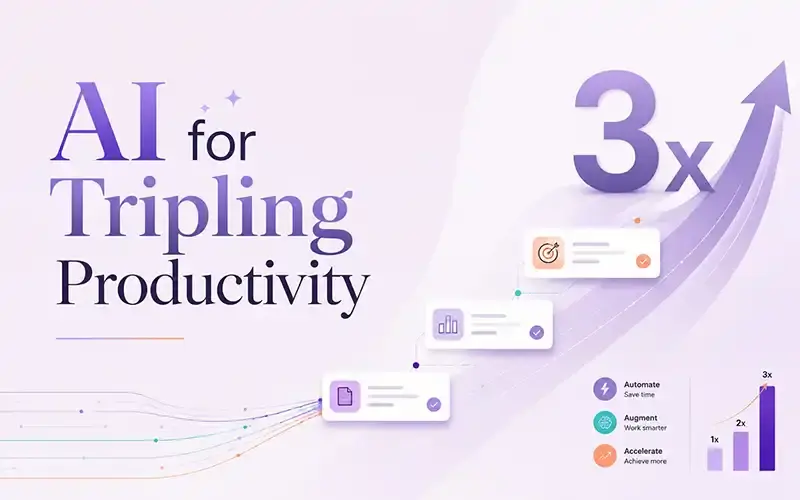
AI for Tripling Productivity
AI for End Users Plus is an intermediate-level lesson designed to deepen the skills of users who already understand the basics of artificial intelligence. This course focuses on applying advanced AI tools to real-world tasks, enhancing productivity, creativity, and efficiency in professional and personal contexts. Learners will explore features such as AI-powered content creation, smart assistants, task automation, and data-driven decision support. The course also covers responsible AI use, including ethical considerations, privacy concerns, and how to critically evaluate AI-generated content. Whether you're aiming to work smarter, streamline workflows, or better collaborate with AI systems, this lesson equips you with the tools and mindset needed to use AI confidently and effectively.
- 30 h 4.8 (0)
You may also like
Check out most 🔥 courses in the market
Dora Lead Manager
The DORA (Digital Operational Resilience Act) Lead Manager course equips senior professionals with the skills and knowledge needed to oversee, manage, and ensure compliance with the DORA framework in financial institutions and related ICT service providers. This program covers operational resilience strategies, ICT risk management, incident handling, reporting requirements, and oversight of third-party providers, enabling participants to lead their organizations in meeting the EU’s regulatory expectations effectively.
4.9
(2000)
ISO 9001 Lead Implementer
The ISO 9001 Lead Implementer training course equips participants with the necessary knowledge and skills to support an organization in establishing, implementing, managing, and maintaining a Quality Management System (QMS) based on ISO 9001:2015. This course provides a practical methodology for the implementation process by applying best practices and aligning with international quality management standards. By the end of the course, participants will gain hands-on expertise in leading implementation projects, managing teams, and preparing organizations for certification audits.
4.8
(3000)
ISO 42001 AI lead implementer
The ISO/IEC 42001 Lead Auditor course equips professionals with the knowledge and skills to conduct and lead Artificial Intelligence Management System (AIMS) audits in compliance with ISO/IEC 42001. Participants will learn to apply internationally recognized audit principles, manage audit programs, and ensure AI governance aligns with ethical, legal, and organizational requirements. The course prepares attendees for certification as an ISO/IEC 42001 Lead Auditor, empowering them to assess AI systems for compliance, risk management, and continuous improvement.
4.9
(2000)AI For End User
This course is a practical, tool-agnostic training program designed for professionals who want to leverage artificial intelligence in their daily work without needing a background in data science or programming. Participants will learn how AI interprets and processes human language, how to interact with AI tools effectively, and how to integrate AI into everyday tasks to enhance productivity, decision-making, and creativity.
4.9
(2457)AI For End User Plus
This advanced lesson builds on foundational AI knowledge to help users unlock the full potential of AI tools in personal and professional settings. Learners will explore more powerful features of AI platforms, gain hands-on experience with smart assistants, content generators, and automation tools, and learn strategies for integrating AI into workflows. The course also emphasizes data awareness, ethical use, and decision-making with AI support—empowering users to use AI responsibly and effectively in real-world scenarios.
4.9
(1953)
