 English
 Dora Lead Manager
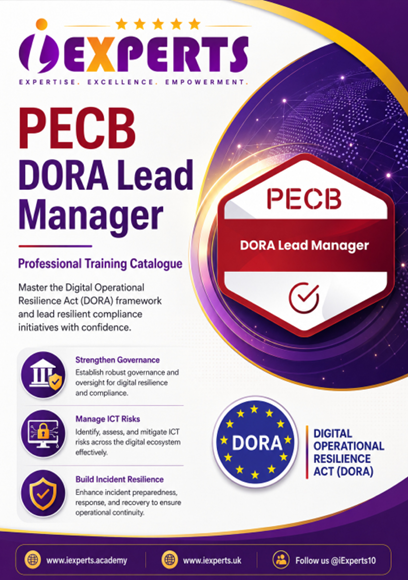
The DORA (Digital Operational Resilience Act) Lead Manager course equips senior professionals with the skills and knowledge needed to oversee, manage, and ensure compliance with the DORA framework in financial institutions and related ICT service providers. This program covers operational resilience strategies, ICT risk management, incident handling, reporting requirements, and oversight of third-party providers, enabling participants to lead their organizations in meeting the EU’s regulatory expectations effectively.
- 4.9/5.0
- 2000 Enrolled
- Last updated Jun 18, 2026
Course Overview
DORA (Digital Operational Resilience Act) Lead Manager
- The DORA Lead Manager course is designed to empower senior professionals with the advanced competencies required to oversee and manage the implementation of the Digital Operational Resilience Act (DORA) across financial institutions and their critical ICT (Information and Communication Technology) service providers.
- This comprehensive program provides an in-depth understanding of the EU’s DORA regulatory framework, focusing on how organizations can strengthen their digital resilience, ensure business continuity, and maintain operational integrity in the face of cyber threats, ICT disruptions, and third-party dependencies.
Participants will learn how to establish, govern, and continuously improve ICT risk management frameworks, ensuring alignment with DORA’s five key pillars:
- ICT Risk Management – Developing and maintaining effective strategies, policies, and controls to mitigate technology and cybersecurity risks.
- Incident Reporting and Management – Building structured processes for incident detection, response, escalation, and regulatory notification.
- Operational Resilience Testing – Implementing and overseeing robust testing methodologies to assess and enhance system resilience.
- Third-Party Risk Management – Evaluating and monitoring ICT service providers to ensure compliance with outsourcing and concentration risk requirements.
- Information Sharing and Oversight – Promoting collaboration and communication across teams and with regulators to strengthen sector-wide resilience.
- The course also emphasizes strategic leadership skills, enabling participants to guide multidisciplinary teams, communicate effectively with regulators, and integrate DORA principles into the organization’s governance and compliance frameworks. Real-world case studies, best practices, and practical toolkits are used to translate regulatory obligations into actionable strategies.
By the end of the program, participants will be able to:
- Lead DORA compliance initiatives across all relevant business units.
- Develop policies and frameworks for ICT risk and resilience management.
- Manage incident reporting and ensure timely communication with authorities.
- Oversee audits, assessments, and internal controls aligned with DORA requirements.
- Build stronger collaboration between risk, IT, and compliance functions.
The DORA Lead Manager course is ideal for:
- Chief Risk Officers (CROs), Chief Information Security Officers (CISOs), and Compliance Leaders.
- Senior Managers in ICT, Cybersecurity, Governance, or Operations.
- Consultants and advisors supporting financial institutions in regulatory compliance.
Course Outlines
Module 1 – Introduction to DORA
- Overview
of the Digital Operational Resilience Act (DORA):
Understand the origins, objectives, and importance of the DORA regulation within the European Union’s financial ecosystem. Explore its role in ensuring that financial institutions can withstand, respond to, and recover from ICT-related disruptions. - Objectives,
Scope, and Key Definitions:
Examine DORA’s scope, including entities covered (banks, insurers, investment firms, ICT providers), and learn key regulatory definitions such as “digital resilience,” “ICT risk,” and “critical third-party providers.” - The
Role of a Lead Manager under DORA:
Define the strategic and operational responsibilities of a DORA Lead Manager in guiding compliance, managing cross-functional teams, and aligning digital resilience objectives with business goals.
Module 2 – Governance & Oversight
- Senior
Management Responsibilities:
Learn how DORA assigns ultimate accountability for digital operational resilience to the board and senior management. Understand their role in setting policies, risk appetite, and resilience objectives. - Accountability
and Decision-Making Processes:
Explore governance frameworks that promote clear accountability, transparent decision-making, and effective escalation paths for ICT-related incidents. - Integration
of Resilience into Corporate Governance:
Discover how to embed resilience principles into corporate strategies, enterprise risk management, and overall governance structures to support regulatory expectations.
Module 3 – ICT Risk Management Framework
- Risk
Identification and Classification:
Develop the ability to identify and categorize ICT risks, assess their potential impact, and map them across business functions and critical assets. - Risk
Mitigation Strategies and Controls:
Learn to design and implement risk control measures, preventive strategies, and contingency plans aligned with DORA requirements and best practices. - Continuous
Monitoring and Review:
Understand how to establish ongoing monitoring systems, metrics, and review cycles to ensure that the ICT risk management framework remains effective and up to date.
Module 4 – Incident Management & Reporting
- Major
Incident Classification Criteria:
Gain clarity on what constitutes a “major incident” under DORA, and how to apply objective criteria for classification and prioritization. - Internal
Escalation Processes:
Learn to establish structured escalation pathways for timely internal communication and decision-making during ICT incidents. - Reporting
Obligations to Competent Authorities:
Understand the regulatory reporting timelines, content, and format required for notifying national and EU authorities about major ICT incidents.
Module 5 – Digital Operational Resilience Testing
- Threat-Led
Penetration Testing (TLPT):
Examine the requirements for TLPT exercises, including scope, methodology, red team operations, and assessment of critical functions. - Testing
Methodologies and Frequency:
Learn different testing types (scenario-based, vulnerability assessments, continuity tests) and how to define an appropriate testing schedule. - Reporting
and Remediation Plans:
Develop capabilities in documenting test results, identifying weaknesses, and implementing remediation plans to strengthen ICT resilience.
Module 6 – Third-Party Risk Management
- Outsourcing
Register and Contractual Requirements:
Explore how to maintain a comprehensive outsourcing register and ensure contracts with ICT third-party providers meet DORA’s legal and operational requirements. - Managing
ICT Third-Party Providers:
Learn methods for assessing provider risks, conducting due diligence, and setting performance and security benchmarks. - Oversight
of Critical Service Providers:
Understand supervisory expectations regarding the monitoring of critical ICT providers and how to maintain business continuity in case of provider failure.
Module 7 – Information Sharing & Cooperation
- Collaboration
Between Financial Entities:
Learn how institutions can strengthen resilience through structured collaboration, sharing best practices, and coordinated incident response. - Sectoral
Threat Intelligence Sharing:
Discover mechanisms for sharing cyber threat intelligence across the financial sector, and how this contributes to collective resilience. - Ensuring
Confidentiality and Security in Shared Data:
Examine protocols for protecting sensitive data during information exchanges and maintaining compliance with data protection laws.
Module 8 – Achieving & Maintaining Compliance
- Compliance
Monitoring Tools and KPIs:
Learn how to track ongoing compliance through measurable performance indicators and automated monitoring tools. - Gap
Analysis and Remediation Strategies:
Develop the ability to identify gaps in existing frameworks, prioritize actions, and implement effective remediation plans. - Preparing
for Audits and Regulatory Reviews:
Understand how to document compliance efforts, prepare for supervisory reviews, and demonstrate a culture of continuous improvement in digital operational resilience.
Course Objectives
Course Objectives – DORA Lead Manager
By the end of this course, participants will be able to:
- Comprehensively
understand the scope, principles, and requirements of DORA (Digital Operational
Resilience Act):
Gain an in-depth understanding of the EU’s regulatory framework for digital operational resilience, including its key objectives, covered entities, and compliance expectations. - Implement strong
governance and oversight structures:
Effectively define roles and responsibilities across senior management and operational teams to ensure accountability, transparency, and alignment with DORA’s governance standards. - Develop and maintain
a robust ICT Risk Management Framework:
Identify, assess, and mitigate ICT-related risks through proactive controls, continuous monitoring, and documented risk management processes tailored to organizational needs. - Lead efficient
incident management and reporting processes:
Establish comprehensive incident detection, classification, and response mechanisms, and ensure timely and accurate reporting of major incidents to competent authorities. - Oversee
third-party and outsourcing compliance:
Evaluate and monitor ICT third-party service providers to ensure contractual, security, and resilience obligations are met, minimizing dependencies and systemic risk. - Prepare the
organization for resilience testing and regulatory audits:
Design and conduct resilience testing programs, simulate crisis scenarios, and coordinate internal audits to validate operational continuity and compliance readiness. - Ensure continuous
alignment and compliance with DORA regulations:
Integrate DORA requirements into the organization’s long-term strategy, promoting a culture of resilience, regulatory awareness, and continuous improvement. - Promote a
risk-aware culture and cross-departmental collaboration:
Facilitate communication and training across departments to embed resilience practices throughout the organization and enhance collective response capabilities.
Course Prerequisites
Prerequisites – DORA Lead Manager Course
To ensure participants gain the maximum benefit from this program, the following foundational knowledge and experience are recommended:
- Basic
Understanding of ICT Governance and Risk Management:
Participants should be familiar with the principles of information and communications technology (ICT) governance, including how policies, processes, and controls are implemented to manage digital and operational risks within an organization. - Familiarity
with Financial Services Regulatory Frameworks:
Since DORA applies primarily to financial entities and related ICT service providers, a working knowledge of financial sector regulations, compliance standards, and supervisory expectations within the EU is beneficial. - Experience
in Leadership or Management Roles (ICT, Compliance, or Risk):
The course is designed for professionals who have held or currently hold positions involving decision-making responsibilities, oversight of teams or departments, or the management of ICT operations, cybersecurity, or compliance functions. - Knowledge
of Operational Risk Concepts:
Participants should understand core operational risk management principles, including risk identification, assessment, mitigation, and monitoring, as well as the impact of ICT disruptions on business continuity. - Prior
Exposure to Cybersecurity and Resilience Strategies (Preferred):
While not mandatory, previous experience or exposure to cybersecurity frameworks, resilience planning, and incident response processes will help participants engage more effectively with DORA’s technical and regulatory requirements. - Language
and Communication Skills:
Proficiency in English is required, as course materials, discussions, and case studies will be delivered in English. Strong communication skills will support collaboration and active participation in group exercises.
Course Schedule
| Date | Days Left | Training Location | |
|---|---|---|---|
No schedules available | |||
Our Student Reviews
4.9
Excellent
Noah Thompson
The iExperts DORA course was one of the strongest regulatory training courses I’ve taken. It was detailed, focused, and easy to follow, even when covering complex topics. The examples made the requirements much easier to understand, and the course helped me connect DORA obligations to real business processes. I’d definitely recommend it to financial services and ICT professionals.
Olivia Bennett
Excellent course. The iExperts DORA training explained the regulation in a practical way instead of just repeating legal text. I especially liked how the course broke down ICT risk, third-party risk, resilience testing, and incident reporting into clear steps. It felt relevant, well-structured, and genuinely useful for anyone working in compliance, risk, or operational resilience.
Amelia Clarke
Very professional and highly informative course. iExperts did a great job of making DORA understandable without oversimplifying it. The content was relevant, practical, and clearly designed by people who understand governance, compliance, and resilience. I came away with a much better grasp of what firms actually need to do to prepare for DORA.
This course includes
- Duration40 h
- VendorPECB
- CategoryCyber Security | Business Management
- CertificateYes
Course Profile
Similar Courses
ISO 42001 AI lead implementer
The ISO/IEC 42001 Lead Auditor course equips professionals with the knowledge and skills to conduct and lead Artificial Intelligence Management System (AIMS) audits in compliance with ISO/IEC 42001. Participants will learn to apply internationally recognized audit principles, manage audit programs, and ensure AI governance aligns with ethical, legal, and organizational requirements. The course prepares attendees for certification as an ISO/IEC 42001 Lead Auditor, empowering them to assess AI systems for compliance, risk management, and continuous improvement.
- 40 h 4.9 (2000)
NIS 2 Directive Lead Implementer
The NIS 2 Directive Lead Implementer Certification course is designed for professionals seeking to guide organizations through the complex landscape of the European Union's updated Network and Information Security (NIS 2) Directive. This comprehensive program provides a deep dive into the directive's requirements, focusing on practical implementation strategies for enhanced cybersecurity and resilience across critical sectors. Participants will gain the expertise necessary to establish, implement, maintain, and continually improve an organization's NIS 2 compliance framework. This course adopts a structured approach, covering governance, risk management, incident response, technical measures, and legal aspects. It equips lead implementers with the tools and knowledge to conduct gap analyses, develop robust security policies, manage supply chain risks, and ensure effective reporting, ultimately fostering a secure digital environment in line with EU mandates. Through real-world scenarios and best practices, attendees will be prepared to lead their organizations towards full compliance and bolster their overall cyber posture.
- 40 h 4.9 (2000)
ISO27032 Lead Cyber Security Manager
The ISO/IEC 27032 Lead Cybersecurity Manager course equips participants with the knowledge and skills to build and manage an effective cybersecurity program. It covers key cybersecurity principles, governance models, and the relationship with domains like information security and CIIP. Participants learn to identify, assess, and mitigate cyber risks using ISO/IEC 27032 and the NIST CSF. The course also develops capabilities for incident response, policy development, and strengthening cyber resilience. Ideal for cybersecurity and information security professionals seeking practical leadership skills.
- 40 h 4.9 (3000)
Cybersecurity Maturity Model Certification (CMMC)
The CMMC Certified Professional (CCP) course provides a solid understanding of the CMMC framework, its structure, and its requirements for Defense Industrial Base (DIB) organizations. It covers CMMC maturity levels, domains, practices, and stakeholder roles, as well as the relationship with key standards like NIST SP 800-171 and ISO/IEC 27001. Participants learn how to implement cybersecurity controls, navigate the CMMC ecosystem, and understand assessment and accreditation processes. This course prepares learners to support organizations in achieving CMMC compliance. It also serves as the prerequisite for becoming a Certified Assessor or Certified Instructor.
- 32 h 4.7 (2374)
You may also like
Check out most 🔥 courses in the market
ISO 9001 Lead Implementer
The ISO 9001 Lead Implementer training course equips participants with the necessary knowledge and skills to support an organization in establishing, implementing, managing, and maintaining a Quality Management System (QMS) based on ISO 9001:2015. This course provides a practical methodology for the implementation process by applying best practices and aligning with international quality management standards. By the end of the course, participants will gain hands-on expertise in leading implementation projects, managing teams, and preparing organizations for certification audits.
4.8
(3000)ISO 42001 AI lead implementer
The ISO/IEC 42001 Lead Auditor course equips professionals with the knowledge and skills to conduct and lead Artificial Intelligence Management System (AIMS) audits in compliance with ISO/IEC 42001. Participants will learn to apply internationally recognized audit principles, manage audit programs, and ensure AI governance aligns with ethical, legal, and organizational requirements. The course prepares attendees for certification as an ISO/IEC 42001 Lead Auditor, empowering them to assess AI systems for compliance, risk management, and continuous improvement.
4.9
(2000)
AI For End User
This course is a practical, tool-agnostic training program designed for professionals who want to leverage artificial intelligence in their daily work without needing a background in data science or programming. Participants will learn how AI interprets and processes human language, how to interact with AI tools effectively, and how to integrate AI into everyday tasks to enhance productivity, decision-making, and creativity.
4.9
(2457)
AI For End User Plus
This advanced lesson builds on foundational AI knowledge to help users unlock the full potential of AI tools in personal and professional settings. Learners will explore more powerful features of AI platforms, gain hands-on experience with smart assistants, content generators, and automation tools, and learn strategies for integrating AI into workflows. The course also emphasizes data awareness, ethical use, and decision-making with AI support—empowering users to use AI responsibly and effectively in real-world scenarios.
4.9
(1953)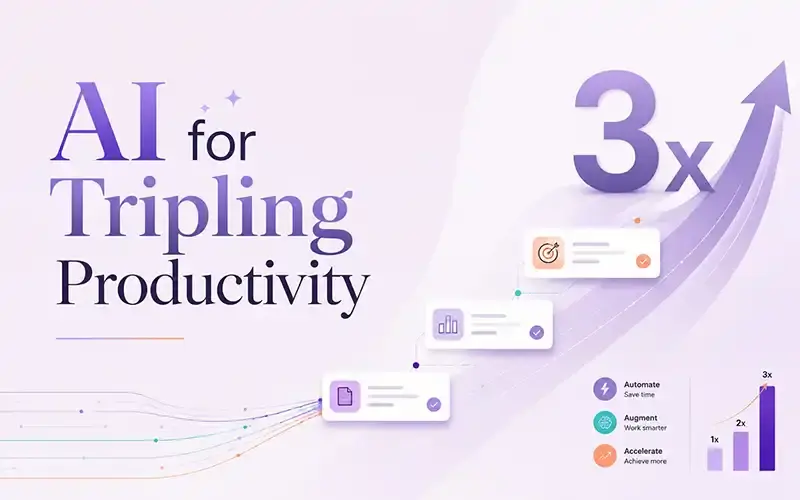
AI for Tripling Productivity
AI for End Users Plus is an intermediate-level lesson designed to deepen the skills of users who already understand the basics of artificial intelligence. This course focuses on applying advanced AI tools to real-world tasks, enhancing productivity, creativity, and efficiency in professional and personal contexts. Learners will explore features such as AI-powered content creation, smart assistants, task automation, and data-driven decision support. The course also covers responsible AI use, including ethical considerations, privacy concerns, and how to critically evaluate AI-generated content. Whether you're aiming to work smarter, streamline workflows, or better collaborate with AI systems, this lesson equips you with the tools and mindset needed to use AI confidently and effectively.
4.8
(0)
