 English
 AI For End User Plus
This advanced lesson builds on foundational AI knowledge to help users unlock the full potential of AI tools in personal and professional settings. Learners will explore more powerful features of AI platforms, gain hands-on experience with smart assistants, content generators, and automation tools, and learn strategies for integrating AI into workflows. The course also emphasizes data awareness, ethical use, and decision-making with AI support—empowering users to use AI responsibly and effectively in real-world scenarios.
- 4.9/5.0
- 1953 Enrolled
- Last updated Jun 14, 2026
Course Overview
GenAI Upskilling Program
Promise
- No fluff—practical skills that ship value immediately.
- Turn everyday users into high-leverage operators with GenAI.
- Work faster and smarter: better drafting, faster analysis, routine automation, safe collaboration.
- Compliance-first: guardrails designed to satisfy audit and policy requirements.
Ideal Participants
- Knowledge workers and project managers.
- Analysts, auditors, and testing teams.
- Customer experience and operations teams.
Format Options
- Bootcamp: 2 days (12–14 hours).
- Core + Plus: 4 half-days (16 hours).
- Team rollout: 6-week cohort (weekly 90-minute sessions + hands-on labs).
Core Outcomes
- Draft higher-quality content (emails, reports, briefs, SOPs) in less time.
- Analyze faster: summarize, compare, and extract insights from messy data and docs.
- Automate routine tasks (checklists, follow-ups, status notes, action logs).
- Collaborate safely with clear red-lines, approvals, and audit-friendly artifacts.
What the “Plus” Track Adds
- Custom GPTs / copilots tailored to team workflows.
- Private knowledge retrieval across your internal documents.
- A reusable prompt patterns library for consistent outputs.
- No-code automations to connect tools and trigger actions.
- Audit-ready practices (logging, approvals, evidence capture).
Sample Skill Map
- Drafting: role prompts, structure templates, tone/voice controls, fact-checking loops.
- Analysis: multi-doc compare, issue trees, bullets-to-briefs, risk & control extraction.
- Automation: daily digests, meeting notes, task generation, handoff checklists.
- Collaboration: red-team prompts, review checklists, traceable edits, handover packets.
- Governance: usage policies, sensitive-data do’s/don’ts, approval paths, evidence artifacts.
Artifacts You Leave With
- Role-specific prompt kits and checklists.
- Reusable templates for reports, audit workpapers, and briefing notes.
- Starter no-code automations (digest, reminder, and QA flows).
- Compliance guardrails quick-reference and review logs.
Security & Compliance Guardrails
- Clear data-handling boundaries (what’s in/out of scope).
- PII handling patterns and redaction techniques.
- Approval workflows, versioning, and evidence capture for audits.
- Model risk management basics: bias checks, explainability, rollback paths.
Eligibility & Assumptions
- No coding required; Plus track remains no-code/low-code.
- Works with standard productivity suites and common file types.
- Best with small cross-functional pods (5–12 participants per pod).
Course Outlines
Transforming Unstructured Data Into Actionable Insights
- Effectively convert messy text or tables into structured insights by ensuring all information is linked to verifiable sources. Transform raw notes into concise summaries, bullet points, SWOT analyses, identified risks with mitigation strategies, and actionable lists, each assigned to an owner and accompanied by deadlines. Utilize automated processes to extract entities such as people, dates, and amounts, mapping each to a traceable source. Attach inline citations and a references block, preserving original source snippets for review. As proof of mastery, conduct a red-team analysis of another group’s summary to identify missing evidence or weak claims.
AI-Assisted Spreadsheet Data Analysis
- Leverage AI tools to analyze spreadsheet data and provide explanations for underlying trends or results. Generate data cleaning steps, including normalization of types, deduplication, and flagging of outliers, maintaining an auditable change log. Clarify formulas and pivot table logic in plain language, and recommend the most effective minimal chart to convey key insights. Formulate “what-if” prompts to test hypotheses and report on the sensitivity of outcomes. Demonstrate mastery by creating a five-slide data story with a one-page technical appendix detailing assumptions and caveats.
Developing an AI-Accelerated Workflow
- Design an AI-accelerated workflow tailored to your role, encompassing intake, drafting, review, and publishing stages. Define intake briefs with key fields: objective, audience, constraints, sources, deadline, and success metric. Implement review gates, including fact-checking, policy compliance, and stakeholder sign-off. For publication, compile a comprehensive pack containing the final version, changelog, approvals, and a distribution note. Demonstrate proficiency by producing a workflow diagram and a reusable prompt kit, packaged with a README file.
Automating Tasks Through No-Code Integrations
- Automate at least one repetitive task using no-code integrations. Eligible workflows include generating daily digests, converting meeting notes into task lists, triaging emails, summarizing tickets, or transforming spreadsheet data into briefs. Implement guardrails such as input validation, PII redaction, and approval steps for external communication. Maintain detailed logs of each run, including timestamps, inputs, outputs, and exceptions for auditing purposes. Demonstrate mastery with a demo run, operational checklist, and rollback instructions.
Designing and Reusing Prompt Patterns
- Create and maintain reusable prompt patterns, such as Chain-of-Thought Lite (visible reasoning without sensitive disclosure), Role+Rules, Critic/Refiner, and Few-Shot Scaffolds. Encode outputs as structured schemas (e.g., JSON) to facilitate downstream automation without manual cleanup. Organize a patterns library, tagging entries by use-case, risk level, and owner. Demonstrate expertise by contributing two distinct patterns, complete with examples and descriptions of potential failure modes.
Building a Custom Copilot with Retrieval and Citations
- Develop a lightweight custom copilot tool with retrieval and citation capabilities. Limit data access to approved folders, clearly defining exclusion rules for confidential or regulated content. Configure retrieval settings, including chunking, metadata filters, and a mandatory citation policy. Establish “I don’t know” responses and escalation procedures to a designated human owner. Prove mastery by conducting a Q&A demo that answers queries from private documents, with clickable citations.
Running an End-to-End AI-Assisted Meeting Loop
- Manage meetings with AI assistance from pre-read digest creation to agenda setting, including timeboxes and desired decisions. Capture live decisions, assign owners, and set due dates, then synchronize post-meeting tasks with relevant tools. Distribute meeting minutes, action trackers, and a list of risks within 30 minutes of meeting completion. Demonstrate mastery by completing two meeting cycles, achieving at least 20% faster follow-up completion.
Validating Outputs Using a Six-Step QA Checklist
- Apply a six-step quality assurance checklist to validate outputs: grounding to sources, recalculating numerics, verifying references and citations, scanning for bias, ensuring privacy/PII protection, and using a red-team prompt. Include a “confidence + caveats” block with each final deliverable. Demonstrate capability by passing a blind QA review of a peer’s deliverable with zero critical defects.
Ensuring Responsible Use and Policy Compliance
- Follow responsible-use rules, including safety, privacy, intellectual property handling, export controls, and regulated content boundaries. Understand Model Risk Management basics: purpose, testing, monitoring, and rollback procedures. Demonstrate compliance by passing a 10-minute oral policy spot-check with scenario-based prompts, achieving a score of at least 90%.
Estimating ROI and Prioritizing Initiatives
- Estimate return on investment by quantifying time saved, error reduction, and changes in risk exposure for automation opportunities. Use an impact vs. effort matrix to classify opportunities as Now, Next, or Later, assigning owners and projected start dates. Demonstrate mastery by submitting a one-page business case for an automation initiative and securing sponsor approval.
Documenting an Audit-Ready Trail for Deliverables
- Maintain an audit-ready documentation trail for all AI-assisted deliverables, including archived inputs, prompts, versions, comments, and approvals, each with timestamps. Attach policy attestations and data-handling declarations. Demonstrate compliance by passing a mock audit with complete, traceable evidence.
Course Objectives
Accelerated Drafting and Structured Communication
- By the conclusion of this program, participants will be able to draft emails, reports, and presentations two to three times faster. They will utilize prompt frameworks that include defining the Role, Goal, Constraints, and Output Schema, progressing through stages such as Brief, Outline, Draft, and Tighten. Task decomposition will be guided by acceptance criteria and OutputSchema definitions, ensuring outputs are structured for direct integration into slides and Standard Operating Procedures (SOPs) using Markdown tables or JSON formats.
- Mastery will be demonstrated through a 20-minute write-up that scores highly in clarity, evidence, and actionability.
Transforming Notes into Actionable Insights
- Participants will learn to convert unstructured notes and tables into organized insights supported by verifiable sources. This includes producing summaries, bullet points, SWOT analyses, risk assessments with mitigations, and assigning owners and dates. Skills in entity extraction, such as identifying names, dates, and amounts with inline citations and a References block, will be developed. Each claim will be traceable to its source using a traceability map.
- Mastery proof involves conducting a red-team review of a peer’s summary, highlighting missing evidence and weak claims.
AI-Assisted Spreadsheet Analysis
- Learners will analyze spreadsheet data with AI support, focusing on both the “what” and the “why.” This covers cleaning plans—such as type normalization, deduplication, and outlier flagging—while producing auditable change logs. Participants will explain formulas and pivots in plain language, select the most effective visualizations, and conduct sensitivity analyses with transparent assumptions and caveats.
- Mastery is demonstrated by delivering a five-slide story and a one-page technical appendix.
Building AI-Accelerated Workflows
- Participants will establish end-to-end AI-accelerated workflows, moving from intake to draft, review, and publish. Intake briefs will capture objectives, audiences, constraints, sources, deadlines, and success metrics. Review gates will include fact-checking, policy checks, stakeholder sign-off, and comprehensive change logs. The publish phase will generate final deliverables, approvals, distribution notes, and archive records for knowledge management.
- Mastery is shown through a workflow diagram and a reusable prompt kit with accompanying README documentation.
No-Code Automation of Repetitive Tasks
- Learners will automate at least one repetitive task using no-code integrations. Examples include generating daily digests, converting meeting notes into actionable tasks, summarizing tickets, transforming spreadsheets into briefs, and managing email triage. Essential guardrails like input validation, Personally Identifiable Information (PII) redaction, and mandatory manual approvals for external communications will be implemented. Observability features such as timestamped logs of inputs, outputs, and exceptions will ensure robust audits.
- Mastery proof consists of a live demo, an operations checklist, and rollback instructions.
Prompt Pattern Design and Reuse
- Participants will design and reuse prompt patterns, including Chain-of-Thought Lite, Role+Rules, Critic/Refiner, and Few-Shot Scaffolds. They will generate schema-first results, such as JSON outputs, to seamlessly integrate with downstream tools. A patterns library will be created, complete with use-case tags, risk levels, owners, and documentation of failure modes.
- Mastery is achieved by contributing two patterns with practical examples.
Building a Lightweight Copilot for Document Retrieval
- Attendees will construct a lightweight copilot capable of answering questions using private documents, retrieval techniques, and citations. The copilot will operate within approved folders, enforce exclusion rules for confidential or regulated content, and refine retrieval with chunking, metadata filters, and mandatory citation policies. It will also feature “I don’t know” responses and support human escalation when necessary.
- Mastery proof is provided through a Q&A demonstration with clickable citations and handling of unknown queries.
End-to-End AI-Assisted Meeting Management
- Participants will run AI-assisted meeting loops, starting with a pre-read digest, followed by an agenda with timeboxes and target decisions. Real-time capture of decisions, owners, and due dates will be synchronized with team tools. The process will culminate in the distribution of minutes, action trackers, and risk logs within 30 minutes of meeting completion.
- Mastery is validated by completing two meeting cycles with at least 20% faster follow-up completion rates.
Output Validation and Quality Assurance
- All outputs will be validated through a six-step Quality Assurance checklist: grounding, numerics, references, bias scan, privacy/PII checks, and red-team prompts. Each deliverable will include a “confidence & caveats” block to ensure transparency.
- Mastery is demonstrated by passing a blind QA review with zero critical defects.
Responsible AI Use and Policy Compliance
- Learners will apply responsible-use rules and undergo policy spot-checks covering safety, privacy, intellectual property, export controls, and handling of regulated content. Model Risk Management processes—including purpose definition, testing, monitoring, and rollback—will be implemented.
- Mastery is proved by achieving a score of 90% or higher in a 10-minute scenario check.
ROI Estimation and Prioritization
- Participants will estimate Return on Investment (ROI) and prioritize initiatives using an impact-versus-effort matrix. They will quantify time savings, error reduction, risk exposure changes, and compliance improvements, tagging opportunities as Now, Next, or Later, and assigning owners and dates.
- Mastery is achieved by preparing a one-page business case that secures sponsor approval.
Audit-Ready Documentation of AI Deliverables
- Attendees will maintain an audit-ready trail for AI-assisted deliverables, archiving inputs, prompts, versions, comments, and approvals with timestamps. Each deliverable will include policy attestations, data-handling declarations, and reviewer sign-offs.
- Mastery is demonstrated by passing a mock audit with complete and traceable evidence.
Stretch Achievements (Plus Track)
- Deploy a role-specific copilot featuring retrieval, citations, and unknown handling.
- Publish a team prompt patterns pack (at least six patterns) with documented failure modes and red-team tests.
- Ship at least one no-code automation to production, complete with logs, alerts, and rollback procedures.
Assessment and Evidence
- Participants will assemble a portfolio containing one data story, one automation, one mini-copilot, and one audit trail. The assessment rubric will cover clarity, grounding, risk handling, impact, and reproducibility. To pass, all core items must be complete, with no critical QA or policy findings.
Suggested Labs
- Speed Draft: Progress from brief to outline to final memo, under timed conditions.
- Messy→Meaning: Transform notes and CSV files into summaries, SWOT analyses, actions, and citations.
- No-Code Bot: Build a digest or ticket summarizer with approval and logging features.
- Copilot Mini-POC: Load three policy documents and enable Q&A with citations and unknowns.
Artifacts to Take Back
- Prompt kits for drafting, analysis, and meetings, plus a role workflow and six-step QA checklist.
- No-code automation recipe and rollback playbook.
- Mini-copilot with retrieval and mandatory citations (using sandbox data).
- Audit trail template covering inputs, prompts, versions, and approvals.
Course Prerequisites
Completion of a basic AI course (e.g., "AI for End Users") or equivalent understanding of AI fundamentals
-
Basic digital literacy, including using web applications and productivity tools
-
Familiarity with common AI tools, such as virtual assistants, chatbots, or recommendation systems
-
Comfort with using cloud-based platforms and navigating modern digital work environments
Course Schedule
| Date | Days Left | Training Location | |
|---|---|---|---|
Our Student Reviews
4.9
Excellent
John O’Farrell
Standardized SOPs and created checklists; handoff errors dropped noticeably.
Chloe Martin
Weekly demo cadence kept adoption real; leadership buy-in came fast after seeing results.
Ahmed Farouk
Security guidance was realistic; implemented role-based access and prompt red-teaming.
This course includes
- Duration40 h
- VendoriExperts
- CategoryAI
- CertificateYes
Course Profile
Course Quiz
Test your knowledge with our course quiz! Answer a series of questions related to AI For End User Plus.
Similar Courses
AI For End User
This course is a practical, tool-agnostic training program designed for professionals who want to leverage artificial intelligence in their daily work without needing a background in data science or programming. Participants will learn how AI interprets and processes human language, how to interact with AI tools effectively, and how to integrate AI into everyday tasks to enhance productivity, decision-making, and creativity.
- 35 h 4.9 (2457)
AI for Tripling Productivity
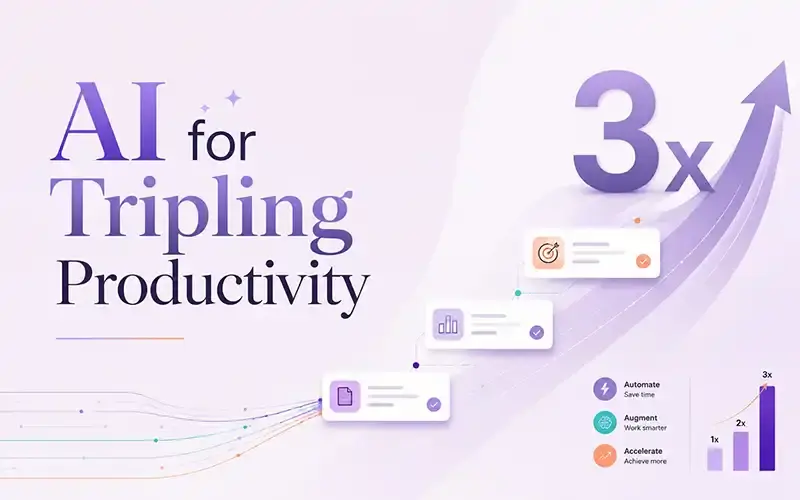
AI for End Users Plus is an intermediate-level lesson designed to deepen the skills of users who already understand the basics of artificial intelligence. This course focuses on applying advanced AI tools to real-world tasks, enhancing productivity, creativity, and efficiency in professional and personal contexts. Learners will explore features such as AI-powered content creation, smart assistants, task automation, and data-driven decision support. The course also covers responsible AI use, including ethical considerations, privacy concerns, and how to critically evaluate AI-generated content. Whether you're aiming to work smarter, streamline workflows, or better collaborate with AI systems, this lesson equips you with the tools and mindset needed to use AI confidently and effectively.
- 30 h 4.8 (0)
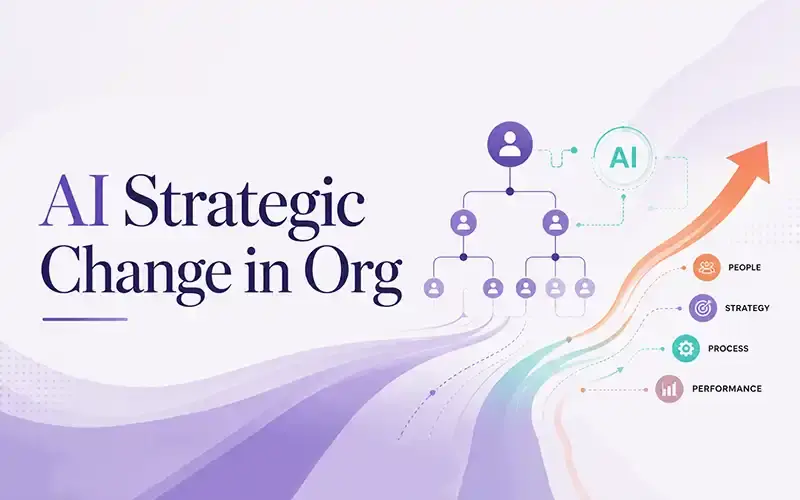
AI Strategic Change in Org
This course explores how Artificial Intelligence (AI) is transforming the way organizations operate, compete, and evolve. It focuses on strategic, organizational, and cultural implications of AI beyond technical aspects. Participants will learn to leverage AI for innovation, process optimization, and data-informed decision-making. The program covers aligning AI with business goals, assessing readiness, and creating an implementation roadmap. Through case studies and frameworks, learners will examine AI-driven transformation, including change management, cross-functional collaboration, and ethical considerations. By the end, participants will be equipped to lead AI initiatives that enhance efficiency, resilience, and long-term value.
- 16 h 4.9 (2998)
You may also like
Check out most 🔥 courses in the market
Dora Lead Manager
The DORA (Digital Operational Resilience Act) Lead Manager course equips senior professionals with the skills and knowledge needed to oversee, manage, and ensure compliance with the DORA framework in financial institutions and related ICT service providers. This program covers operational resilience strategies, ICT risk management, incident handling, reporting requirements, and oversight of third-party providers, enabling participants to lead their organizations in meeting the EU’s regulatory expectations effectively.
4.9
(2000)
ISO 9001 Lead Implementer
The ISO 9001 Lead Implementer training course equips participants with the necessary knowledge and skills to support an organization in establishing, implementing, managing, and maintaining a Quality Management System (QMS) based on ISO 9001:2015. This course provides a practical methodology for the implementation process by applying best practices and aligning with international quality management standards. By the end of the course, participants will gain hands-on expertise in leading implementation projects, managing teams, and preparing organizations for certification audits.
4.8
(3000)
ISO 42001 AI lead implementer
The ISO/IEC 42001 Lead Auditor course equips professionals with the knowledge and skills to conduct and lead Artificial Intelligence Management System (AIMS) audits in compliance with ISO/IEC 42001. Participants will learn to apply internationally recognized audit principles, manage audit programs, and ensure AI governance aligns with ethical, legal, and organizational requirements. The course prepares attendees for certification as an ISO/IEC 42001 Lead Auditor, empowering them to assess AI systems for compliance, risk management, and continuous improvement.
4.9
(2000)AI For End User
This course is a practical, tool-agnostic training program designed for professionals who want to leverage artificial intelligence in their daily work without needing a background in data science or programming. Participants will learn how AI interprets and processes human language, how to interact with AI tools effectively, and how to integrate AI into everyday tasks to enhance productivity, decision-making, and creativity.
4.9
(2457)AI for Tripling Productivity
AI for End Users Plus is an intermediate-level lesson designed to deepen the skills of users who already understand the basics of artificial intelligence. This course focuses on applying advanced AI tools to real-world tasks, enhancing productivity, creativity, and efficiency in professional and personal contexts. Learners will explore features such as AI-powered content creation, smart assistants, task automation, and data-driven decision support. The course also covers responsible AI use, including ethical considerations, privacy concerns, and how to critically evaluate AI-generated content. Whether you're aiming to work smarter, streamline workflows, or better collaborate with AI systems, this lesson equips you with the tools and mindset needed to use AI confidently and effectively.
4.8
(0)
