 English
 AI Risk Management (AI RMF)
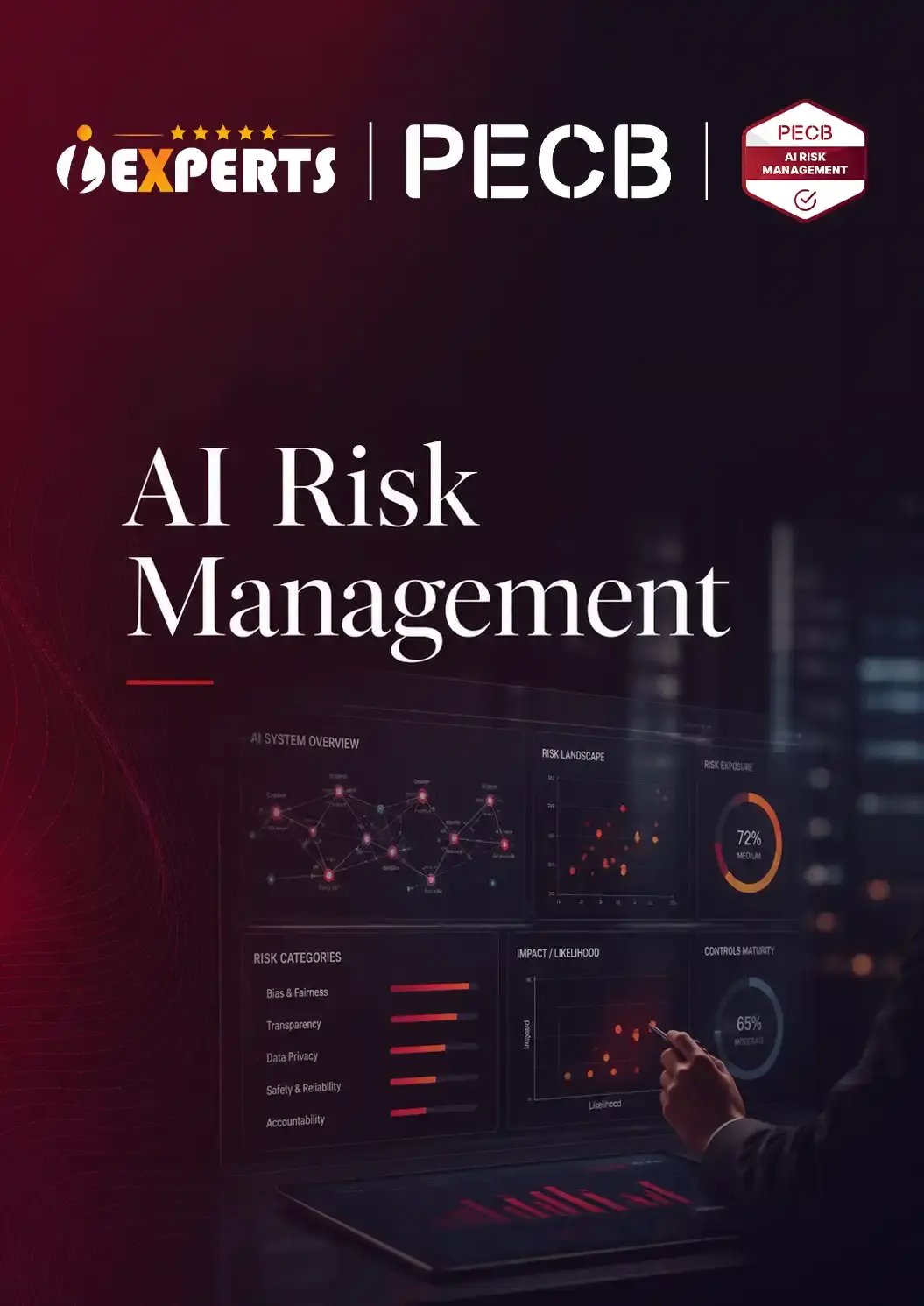
Artificial Intelligence is creating new opportunities for organizations, but it also introduces risks related to security, privacy, bias, transparency, accountability, and compliance. This AI Risk Management course helps participants understand how to identify, assess, and manage AI-related risks using a structured and practical approach. The course introduces the NIST AI Risk Management Framework (AI RMF) and its core functions: Govern, Map, Measure, and Manage. Participants will learn how to support responsible AI adoption, improve AI governance, and contribute to building secure, trustworthy, and accountable AI systems.
- 4.6/5.0
- 500 Inscrits
- Dernière mise à jour Aug 28, 2026
Aperçu du cours
- Analyze the multifaceted risks associated with AI systems across various domains and their potential impacts.
- Apply the principles and core functions of the NIST AI Risk Management Framework (AI RMF) to real-world AI applications.
- Design robust AI governance structures, policies, and ethical guidelines within an organizational context.
- Identify and characterize potential AI risks throughout the entire AI system lifecycle, from conception to deployment and retirement.
- Develop and implement effective strategies for measuring, monitoring, and reporting AI system risks and performance.
- Implement practical mitigation techniques and comprehensive incident response plans for AI-related failures, biases, or security breaches.
- Evaluate emerging AI risks and adapt existing risk management strategies to address new challenges effectively.
- Communicate complex AI risk concepts, frameworks, and solutions clearly and persuasively to diverse technical and non-technical stakeholders.
Plans du cours
Module 1: Introduction to AI and its Risk Landscape
- Defining Artificial Intelligence: Concepts, types, and current trends
- The dual nature of AI: Opportunities, benefits, and inherent challenges
- Categorizing AI risks: Technical, ethical, societal, operational, and legal dimensions
- The critical importance of AI Risk Management for organizational resilience
- Overview of the evolving global regulatory landscape for AI (e.g., GDPR, EU AI Act, US initiatives)
Module 2: Foundations of the NIST AI Risk Management Framework (AI RMF)
- Introduction to the NIST AI RMF 1.0: Purpose, structure, and guiding principles
- Deconstructing the four core functions: Govern, Map, Measure, and Manage
- Understanding AI RMF profiles: Tailoring the framework to specific contexts
- Key stakeholders in AI risk management and their roles and responsibilities
- Integrating AI RMF with existing enterprise risk management (ERM) frameworks
Module 3: Govern: Establishing AI Risk Governance and Accountability
- Developing organizational AI ethics policies and principles
- Defining roles, responsibilities, and accountability structures for AI systems
- Establishing an AI risk culture through training, awareness, and communication
- Designing oversight mechanisms, review boards, and audit processes for AI
- Legal and compliance considerations in AI governance: Data privacy, consumer protection, non-discrimination
Module 4: Map: Identifying and Characterizing AI Risks
- Techniques for comprehensive AI risk identification across the AI lifecycle (design, development, deployment, monitoring)
- Understanding AI system capabilities, limitations, and failure modes
- Identifying data privacy, security, and integrity risks in AI pipelines
- Assessing risks related to bias, fairness, transparency, and explainability
- Conducting AI impact assessments (AIAs) and stakeholder analysis
Module 5: Measure: Analyzing and Quantifying AI Risks
- Developing appropriate metrics and indicators for AI risk assessment
- Applying quantitative and qualitative risk analysis techniques to AI systems
- Leveraging tools and technologies for AI risk measurement and monitoring
- Establishing continuous monitoring and auditing processes for AI performance and compliance
- Effective reporting of AI risk status and trends to diverse stakeholdersLesson Plan
Module 6: Manage: Mitigating and Responding to AI Risks
- Designing and implementing AI risk mitigation strategies: technical controls, process improvements, human oversight
- Developing robust incident response and recovery plans for AI failures, misuse, or adversarial attacks
- Establishing continuous feedback loops for iterative risk management and improvement
- Best practices for responsible AI deployment, maintenance, and eventual decommissioning
- Strategies for effectively communicating AI risks and mitigation efforts to internal and external audiences
Module 7: Advanced Topics and Real-World AI RMF Applications
- Sector-specific applications of AI RMF (e.g., healthcare, finance, critical infrastructure)
- Addressing emerging AI risks: Explainable AI (XAI), adversarial robustness, deepfakes, and synthetic media
- Integrating AI RMF with MLOps, DevSecOps, and secure software development lifecycles
- Global perspectives on AI regulation, standards, and international collaboration
- Practical workshops: Applying the NIST AI RMF to complex real-world AI use cases and developing tailored profiles
Objectifs du cours
- Analyze the multifaceted risks associated with AI systems across various domains and their potential impacts.
- Apply the principles and core functions of the NIST AI Risk Management Framework (AI RMF) to real-world AI applications.
- Design robust AI governance structures, policies, and ethical guidelines within an organizational context.
- Identify and characterize potential AI risks throughout the entire AI system lifecycle, from conception to deployment and retirement.
- Develop and implement effective strategies for measuring, monitoring, and reporting AI system risks and performance.
- Implement practical mitigation techniques and comprehensive incident response plans for AI-related failures, biases, or security breaches.
- Evaluate emerging AI risks and adapt existing risk management strategies to address new challenges effectively.
- Communicate complex AI risk concepts, frameworks, and solutions clearly and persuasively to diverse technical and non-technical stakeholders.
Prérequis du cours
- A foundational understanding of Artificial Intelligence concepts, machine learning terminology, and data science basics.
- Familiarity with general risk management principles and corporate governance structures.
- Experience in IT governance, cybersecurity, compliance, or data ethics is highly beneficial.
- Strong analytical, critical thinking, and problem-solving skills.
- An ability to engage with complex ethical, legal, and societal considerations related to technology.
Calendrier du cours
| Date | Jours restants | Lieu de formation | |
|---|---|---|---|
Aucun calendrier disponible | |||
Avis de nos clients
4.6
(*)(*)(*)(*)(*)
Excellent
(*)(*)(*)(*)(*)
(*)(*)(*)(*)( )
( )( )( )( )( )
( )( )( )( )( )
( )( )( )( )( )
Irene Leroy
The course materials for AI Risk Management from iExperts were well organised. I could revise quickly and remember the key points.
(*)(*)(*)(*)( )
George Muller
I joined AI Risk Management at iExperts to prepare for a new role. The course gave me good confidence and a clear plan.
(*)(*)(*)(*)(*)
Anna De Vries
iExperts explained AI Risk Management in a logical order. This helped me connect AI controls and risk decisions with my daily responsibilities.
(*)(*)(*)(*)(*)
Ce cours comprend
- Durée32 h
- PartenariatPECB
- CatégorieAI
- CertificatOui
Profil du cours
Cours similaires
ISO 42001 Lead Auditor (AIMS)
ISO/IEC 42001 Lead Auditor course is designed to equip participants with the knowledge and practical auditing skills required to assess Artificial Intelligence Management Systems (AIMS) against ISO/IEC 42001 requirements. The course covers AI governance, risk management, accountability, transparency, ethical AI practices, and continual improvement across the AI system lifecycle. Participants will learn how to plan, conduct, report, and follow up on audits of AI management systems in line with international auditing principles. The course is ideal for auditors, compliance professionals, AI governance specialists, risk managers, consultants, and professionals responsible for ensuring responsible, secure, and well-controlled use of artificial intelligence within organizations.
- 32 h 4.9 (800)
Tags du cours
Vous pourriez aussi aimer
Découvrez les cours les plus 🔥 du marché
Certified Information Security Manager (CISM)
The Certified Information Security Manager (CISM) course provides essential expertise in designing, managing, and governing enterprise information security programs. It equips you to align security strategies with business objectives, conduct risk assessments, and implement effective controls. You will learn to manage incident response, evaluate vulnerabilities, and ensure organizational compliance. The program also builds leadership and communication skills to promote a strong security culture. Earning CISM validates your ability to lead security initiatives that protect assets and support business success.
4.8
(2135)
Certified in the Governance of Enterprise IT (CGEIT)
The Certified in the Governance of Enterprise IT (CGEIT) course equips experienced professionals to lead and optimize enterprise IT governance. It focuses on aligning IT strategies with business objectives, maximizing value delivery, and ensuring effective risk and resource management. Participants gain a strong understanding of governance frameworks, strategic alignment, and accountability structures. The course also covers key components such as policies, processes, SLAs/OLAs, and data integrity. Graduates will be able to design, implement, and monitor robust IT governance systems that enhance organizational performance.
4.8
(1743)
Certified Information Systems Auditor (CISA)
The Certified Information Systems Auditor (CISA) course equips professionals to audit, control, and secure IT systems effectively. Participants learn to assess IT governance, evaluate system performance, and manage risks and compliance. The course covers data protection, internal controls, and business continuity planning. It prepares attendees for the CISA exam and roles such as IT auditor, risk manager, and compliance officer. Certification validates expertise in IT governance and adherence to global standards.
5
(2398)
Dora Lead Manager
The DORA (Digital Operational Resilience Act) Lead Manager course equips senior professionals with the skills and knowledge needed to oversee, manage, and ensure compliance with the DORA framework in financial institutions and related ICT service providers. This program covers operational resilience strategies, ICT risk management, incident handling, reporting requirements, and oversight of third-party providers, enabling participants to lead their organizations in meeting the EU’s regulatory expectations effectively.
4.9
(2000)
ISO 9001 Lead Implementer
The ISO 9001 Lead Implementer training course equips participants with the necessary knowledge and skills to support an organization in establishing, implementing, managing, and maintaining a Quality Management System (QMS) based on ISO 9001:2015. This course provides a practical methodology for the implementation process by applying best practices and aligning with international quality management standards. By the end of the course, participants will gain hands-on expertise in leading implementation projects, managing teams, and preparing organizations for certification audits.
4.8
(3000)